
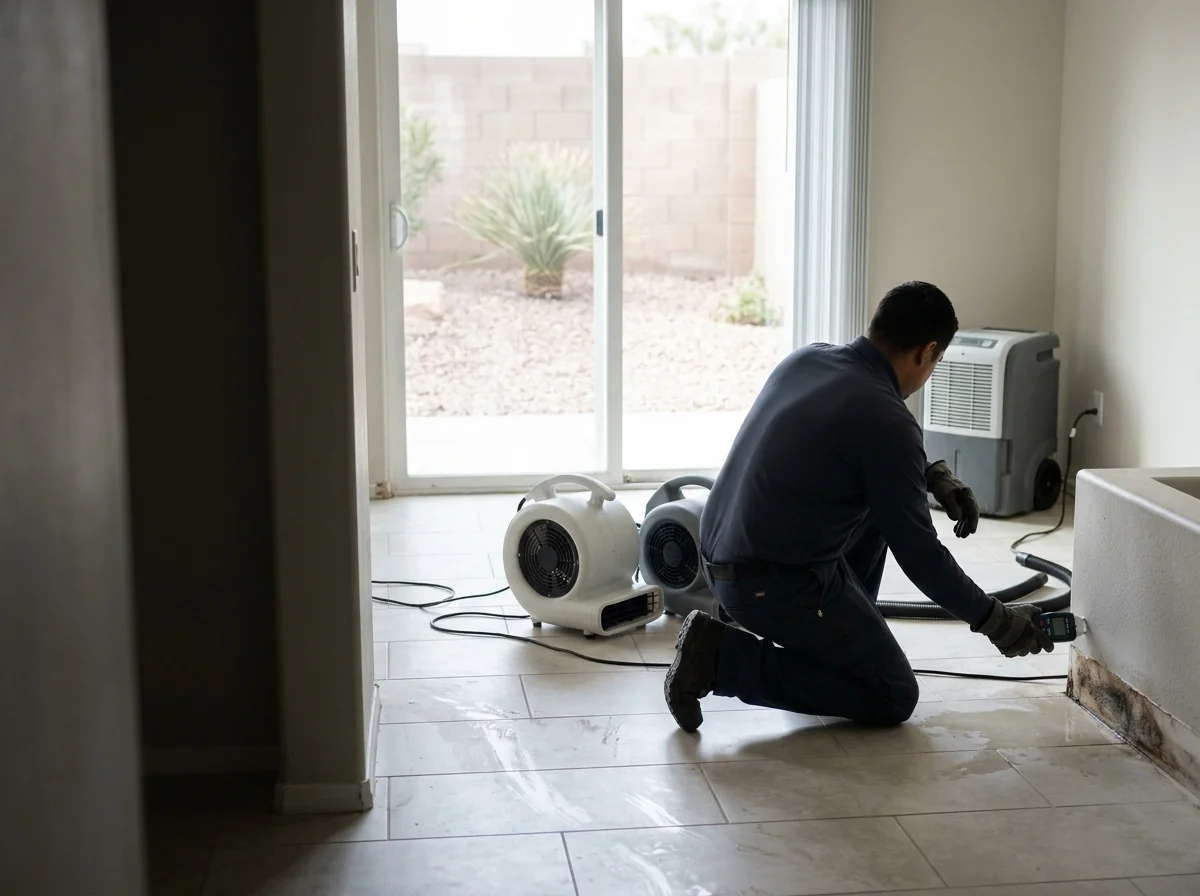
Water Damage Restoration in Las Vegas, NV
Water damage restoration in Las Vegas covers emergency water removal, drying, cleanup and repairs, plus flood, fire, biohazard and mold work across the valley. Homeowners and property owners in Las Vegas can call about residential water damage for professional cleanup and restoration services.
What is water damage restoration?
Water damage restoration is a four-stage process that stops a water loss and returns a structure to its pre-loss condition. Extraction removes standing and excess water. Drying pulls moisture from drywall, wood framing and cabinets with air movers and dehumidifiers. Cleanup removes contaminated materials and sanitizes affected areas. Repair replaces the damaged materials.
The water category decides which materials can be dried and which must be removed. IICRC S500 sorts water into three categories: clean, gray and black (IICRC S500).
Before you call
Water damage details help the specialist explain next steps on the first call. Have these ready:
Mitigation, remediation, restoration and flood
| Term | What it means | When it applies |
|---|---|---|
| Mitigation | Stops water from spreading and protects contents | Right after the water loss |
| Remediation | Removes a contaminant such as mold or sewage residue | When contamination is present |
| Restoration | Returns the home to its pre-loss condition | After mitigation, as the whole process |
| Flood water | Comes from outside, such as storm runoff or overflowing washes | Usually Category 3 black water |
| Leak | Comes from plumbing, an appliance, the AC or a water heater | Usually Category 1 or 2, unless it touches sewage |
Water damage restoration services in the Las Vegas valley
Services across the Las Vegas valley include emergency water removal, water extraction, drying, repair, flood cleanup, fire and smoke cleanup, biohazard cleanup and mold remediation. Most water losses need several of them, from extraction through the final repairs.
Fire and water damage restoration covers firefighting water, plus soot and smoke odor that need their own cleanup.
Fire and smoke damage restoration →Black water damage cleanup covers sewage backups, a Category 3 loss that needs contaminated materials removed and sanitized.
Biohazard and sewage cleanup →Visible mold or a musty smell after a leak points to mold remediation, a separate service from drying.
Mold remediation →What causes water damage in Las Vegas homes?
Home water damage in Las Vegas most often comes from burst pipes, failed appliances, AC condensate leaks, monsoon storms and sewage backups. The water source decides which water category applies and what has to be shut off first.
Water damage from burst or leaking pipes
Supply lines run under pressure, so a burst pipe can release a large volume of clean water in minutes. Slow leaks behind walls and under slabs are harder to spot and can show up as stains, swelling baseboards or a rising water bill. Las Vegas averages about 10 freezing nights a year, mostly December to February (NWS), and frozen pipes can still split during those cold snaps.
Water damage from broken appliances and water heaters
In one insurance study of water damage claims, appliance failures caused about 30 percent (Safeco, 2005). A split washing machine hose can flood a laundry room, and a water heater leaking from the tank or relief valve can saturate a garage or closet floor. Discharge from a washing machine or dishwasher drain can be gray water.
Water damage from AC and HVAC condensate leaks
Las Vegas averages 78 days a year at 100°F or hotter (NWS), so air conditioners run for months and produce condensate the whole time. A clogged drain line or cracked pan lets that water spill into ceilings, closets and wall cavities, often from attic air handlers where leaks go unnoticed for days.
Water damage from monsoon storms and flash floods
The monsoon season runs from mid-June through September (NOAA National Weather Service). Short, intense storms send runoff across streets and yards and into garages and ground floors. The Clark County Regional Flood Control District maintains detention basins and channels across the valley, but localized storm flooding still happens (CCRFCD).
Storm water can reach ground floors, garages and basements. A flooded basement needs extraction and sanitizing.
Water damage from sewage backups
A blocked or overloaded sewer line can push water back up through toilets, tubs and floor drains. Sewage backup is Category 3 black water, and it calls for sewage and biohazard cleanup rather than standard drying alone.
Clean, gray and black water, and what gets damaged
Water category is the contamination level of water: clean, gray or black. IICRC S500 defines the three categories, and the category decides which materials can be dried and which must be removed. Clean water left standing can deteriorate in cleanliness as time elapses (UC Riverside summary of IICRC S500).
| Category | Typical sources | Health risk | What usually happens to materials |
|---|---|---|---|
| Category 1 Clean water | Broken supply lines, faucet or tub overflows, clean toilet tanks | Low at first; can become Category 2 if left standing | Structural materials can be dried in place if drying starts quickly |
| Category 2 Gray water | Washing machine and dishwasher discharge, toilet overflow with urine only | Contains contaminants that can cause illness | Porous materials such as carpet pad may need to be removed; hard surfaces are cleaned and dried |
| Category 3 Black water | Sewage backups, flood water from outside, toilet overflow with feces | Grossly contaminated; can carry bacteria and other pathogens | Porous materials that absorbed it may need to be removed and replaced. See biohazard cleanup |
How building materials damaged by water hold up
| Material | What water does | Usual outcome | Notes |
|---|---|---|---|
| Drywall | Swells and loses strength when wet | Dry or replace | May be dried in place if there is no obvious swelling and the seams are intact (EPA); otherwise replace |
| Flooring | Hardwood cups and warps; carpet pad saturates | Dry or replace | Carpet needs extraction and drying, while hard flooring such as tile and vinyl is wiped and dried (EPA) |
| Insulation | Holds water and loses its insulating value | Replace | Discard and replace wet insulation (EPA) |
Drywall and insulation follow EPA guidance. The other rows are general guidance and are not from a published standard.
How the water damage restoration process works
The water restoration process has eight steps, from the first call to the final walkthrough. You are connected to an independent specialist who covers your ZIP code. The specialist sets the price, and you approve the scope of work before work begins.
Call and connect
Call (702) 602-9825 and explain the water source, when it started and which rooms are affected. You are connected with an independent restoration specialist serving your part of the valley.
Water damage inspection and assessment
A specialist will inspect the affected areas, locate the water source and determine the water category. Moisture meters and thermal imaging help identify hidden moisture in wall cavities and under flooring so the full extent is known.
Scope of work and approval
The specialist explains what needs to be extracted, removed, dried and repaired, and sets the price. You review the scope of work and approve it before anything starts.
Water extraction
Pumps and extraction units remove standing water and pull excess water from carpet and pad. The more water extracted at this stage, the shorter the drying process.
Removing damaged materials
Materials that cannot be dried, or that absorbed contaminated water, are removed: damaged drywall, wet insulation, carpet pad and swollen trim. Personal belongings and contents are moved out of the way or protected.
Drying, dehumidifying and monitoring moisture readings
Air movers, dehumidifiers and other specialized equipment dry the structure. Moisture readings are taken and recorded until the materials reach their dry standard.
Cleaning and sanitizing
The affected areas are cleaned and sanitized, with antimicrobial treatment where needed to minimize mold growth. Content cleaning covers the belongings that can be saved.
Repairs and final walkthrough
Repairs replace drywall, flooring, trim and paint to bring the home back to its original condition. A final walkthrough confirms the work and covers any next steps.
Is your water damage a minor spill or an emergency?
Water damage from a spill of clean water that you can wipe up right away is minor; any other water damage needs a restoration specialist now.
Signs of water damage
Water damage often spreads out of sight before the signs show. Look and smell for:
- Stains or discoloration on ceilings and walls
- Bubbling or peeling paint, soft or swollen drywall
- Baseboards that swell and floors that warp or cup
- A musty smell, which can mean hidden moisture or mold spores
- A higher water bill with no change in use
- Running water sounds when every fixture is off
Why the first 24 to 48 hours matter
EPA guidance is to dry water-damaged areas and items within 24 to 48 hours to prevent mold growth (EPA). After that window, materials keep absorbing water: drywall wicks moisture upward, wood floors swell and warp, and airborne spores that are already present can settle and spread.
Clean water left standing can also turn into gray water, which increases how much has to be removed. Acting early helps minimize further damage and keeps more material dryable.
Usually minor: dry it yourself
Water damage from a small spill is usually minor and can be dried yourself. All three should be true:
- Clean water only, on a hard surface
- Found and wiped up right away
- No wet walls, carpet pad or cabinets
Call about it now
- Standing water across a room or more
- Water inside walls, ceilings or under flooring
- Gray or black water, including any sewage
- Water that has passed the 24 to 48 hour drying window
- Sagging ceilings or signs of structural damage
- Water near outlets, cords or the electrical panel
Safe steps while you wait
Shut off the source. Close the appliance valve or the main water shutoff to stop the leak.
Stay clear of electrical hazards. Do not walk through standing water near outlets or cords. Turn off power only if you can reach the breaker from a dry spot.
Protect contents. Move rugs, electronics, documents and small furniture to a dry room.
Document the damage. Take photos and video of the source and every affected room before anything is moved.
Stay out of sewage. Do not try to clean black water yourself.
How to choose a water damage restoration specialist
Water damage restoration specialists differ on four points: what the assessment covers, which license and insurance they hold, how drying is monitored, and who does the repairs. Every specialist you are connected to is independent, so checking the license and insurance before work begins is the homeowner's responsibility.
Ask what the assessment covers
The assessment decides the whole job, so ask what it includes. Ask whether the specialist checks for hidden moisture with moisture meters or thermal imaging, and whether the assessment identifies the water source and the water category.
Ask for the license and insurance, and check them
Nevada building work needs a license from the Nevada State Contractors Board (NSCB). Whether a repair needs a license depends on the scope, including any permit, plumbing, electrical or HVAC work. Look up the license number yourself, and ask for proof of liability insurance and workers' compensation.
Ask how drying is monitored and documented
Drying is monitored with moisture readings, so ask how often readings are taken and what drying equipment will be used. Ask whether you get written logs and photos. You can also ask whether the technicians are certified and whether the work follows IICRC standards.
Ask about the scope of work and who handles repairs
Ask for the scope of work in writing before you approve it. Ask how the price is set, and whether the same specialist does the repairs or another company does.
Cities and ZIP codes covered
Our water restoration service covers 58 ZIP codes: 43 in Las Vegas, 7 in North Las Vegas and 8 in Henderson. If your ZIP code is not listed, call (702) 602-9825 and you will be told whether a specialist covers it.
All areas served →Las Vegas
Summerlin
Crossroads
Westridge
Garside
Silverado
Paradise Valley
Sunrise
Red Rock Vista
King
Emerald
East Las Vegas
Winterwood
James C Brown Jr
Spring Valley
Huntridge
Topaz
North Las Vegas
North Las Vegas
Meadow Mesa
Henderson
Henderson
Valle Verde (Henderson)
Seven Hills
Water damage restoration FAQ
This FAQ answers questions on costs, drying time, mold risk, insurance and prevention.
How much does water damage restoration cost?+
Water damage restoration price is set after the assessment. The main factors are the size of the affected area, the water category, how long the water sat, how much material has to be removed, how many days the drying equipment runs and what repairs are needed.
Can water damage be repaired?+
Materials can be dried in place if drying starts quickly. Drywall, insulation, carpet pad and trim that absorbed too much water, or any contaminated water, may need to be removed and replaced as part of the repairs.
How long does the drying process take?+
Structural drying time depends on the materials, how wet they are and conditions inside the home. Las Vegas air is dry, but wall cavities, cabinets and subfloors still hold moisture. Moisture readings decide when drying is complete.
Will water damage cause mold?+
Water damage can lead to mold. EPA guidance is to dry wet materials within 24 to 48 hours to prevent mold growth (EPA). If you can already see or smell mold, mold remediation is handled as a separate service.
Does insurance cover water damage?+
Water damage coverage depends on your policy and the cause of the damage. Contact your insurer to ask, photograph the damage before anything is moved, and ask what documentation they provide, such as moisture readings and photos.
How do I prevent water damage?+
Replace worn washing machine hoses, check the water heater and its relief valve, keep HVAC condensate lines clear, know where your main shutoff is, and clear yard drainage before monsoon season.
For a burst pipe, do I call a plumber or a restoration company?+
A plumber fixes the pipe. A restoration company handles the water, drying and cleanup. If the pipe is still leaking, shut off the main valve and call a plumber first; call the number above for the water damage it left behind.
How do I know if water damage is minor?+
Water damage from a small spill of clean water on a hard surface, dried right away, can be minor. Standing water, wet walls or ceilings, gray or black water, or water that sat for more than a day is a reason to call a restoration specialist.
What does this service not cover?+
The line does not cover water-damaged phones or electronics, roof repair, remodeling, job inquiries or vendor calls. The line is for residential and property water damage, fire and smoke damage, biohazard cleanup and mold in the Las Vegas valley.
Can I stay in my home during restoration?+
Whether you can stay depends on the damage. Stay out of rooms with standing water near electrical, sagging ceilings or any black water. If one area is wet and the power is safe, many people stay. Ask the specialist during the assessment.
How long does restoration take?+
It depends on the materials, how wet they are and how many rooms are affected. Structural drying takes time, and repairs add time because each layer has to dry before the next one goes in. The specialist gives the schedule in the scope of work.
What is the difference between extraction and drying?+
Extraction removes liquid water from floors, carpet and pad. Drying removes moisture absorbed into drywall, framing and subfloors, and it starts after extraction is finished.
Call our phone line
Water damage help in Las Vegas and North Las Vegas starts with one call. You are connected to an independent specialist who covers your ZIP code.